Functional Area 1 — The Thu Thiem CBD Core
FA1 is the 100-hectare commercial heart of the Thu Thiem master plan — the planned home of Vietnam's first International Financial Centre, the future home of the tallest towers on the peninsula, and the most valuable real-estate parcels in Ho Chi Minh City. This is the complete guide to what FA1 is, what is being built, and what is still to come.
- Functional area
- FA1
- Approximate size
- ~100 ha
- Primary use
- CBD / financial
- Max height
- Tallest in master plan
- Adjacent crossings
- Bridge 2, Tunnel
- Land auction plots
- 3-5, 3-8, 3-9, 3-12
- Status
- Under construction
- Anchor project
- Intl Financial Centre
FA1 at a glance
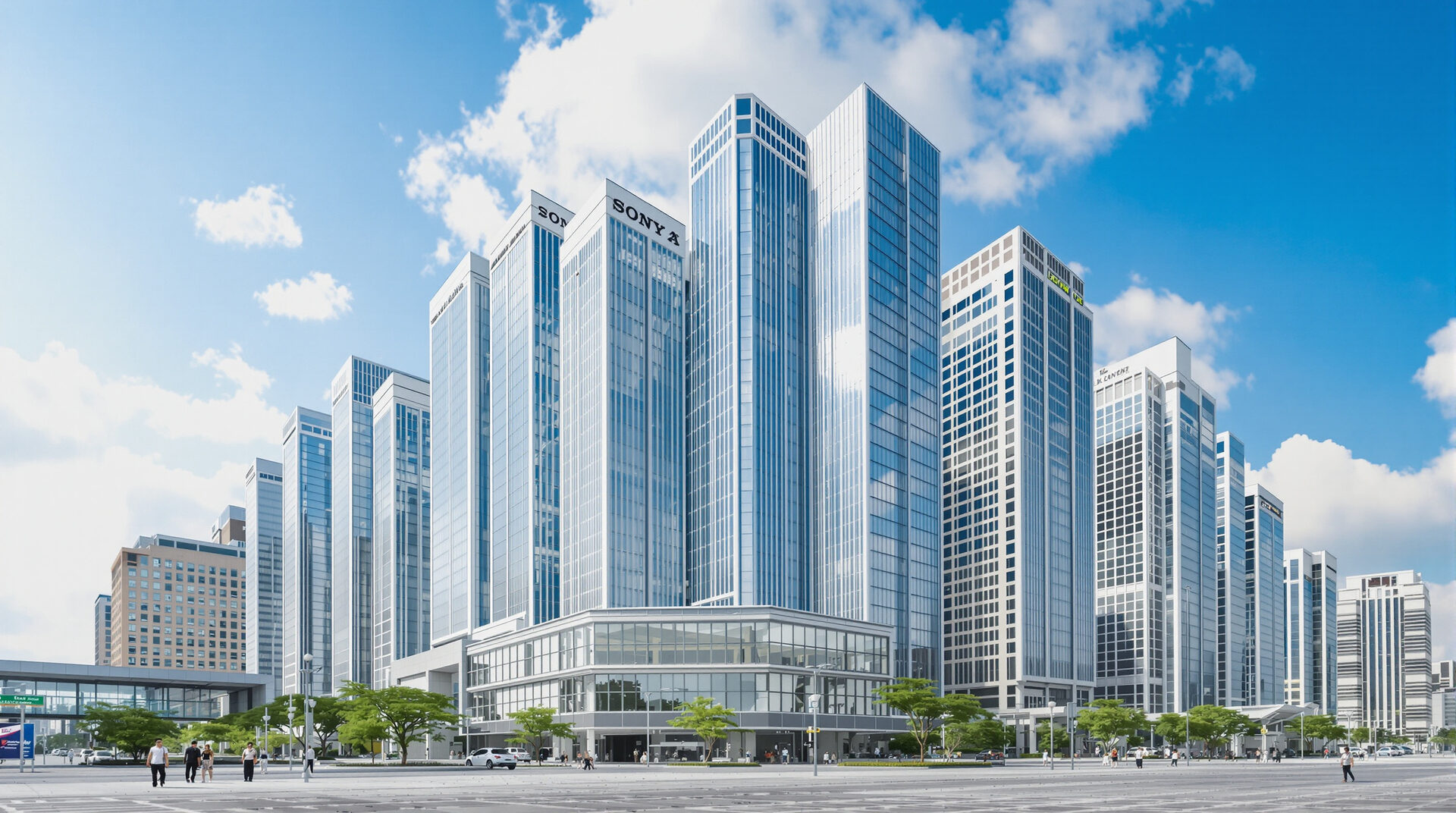
Functional Area 1 sits on the western lobe of the Thu Thiem peninsula, directly opposite District 1 across the Saigon River. Of all eight functional areas in the master plan, FA1 carries the highest density allowance, the tallest height envelope, and the densest commercial-floor area ratio. The development brief is unambiguous: this is the office, hotel, and financial-services core of a new central business district, the bookend to District 1's existing commercial spine.
In the 2005 Sasaki master plan, FA1 is laid out around a north-south central spine that connects the river edge to the inland boundary, with a tighter street grid than any other functional area. The plan calls for a sequence of large floorplate commercial towers along the spine, with retail at podium level, hotels and serviced-residence towers along the river frontage, and the future International Financial Centre campus occupying the most prominent waterfront plots.
What sets FA1 apart from peer projects in Asia — Marina Bay in Singapore, the Lujiazui financial district in Shanghai, the Sai Wan Ho redevelopment in Hong Kong — is the deliberate compactness. The FA1 envelope is small (100 hectares vs Marina Bay's 360, Lujiazui's 280), which means the planned vertical density is among the highest of any new financial district in Asia. The skyline that emerges over the next decade will be dense, recognisable, and architecturally diverse by design.
The International Financial Centre programme
Vietnam has formally designated Ho Chi Minh City as the site of its first International Financial Centre (IFC), with Thu Thiem — specifically FA1 — earmarked as the campus location. The IFC programme has been moving through the legislative and policy pipeline through the 2020s, with the National Assembly considering the enabling resolution and the city preparing the necessary administrative apparatus. The IFC is intended to host foreign banks, asset managers, fintech operators, and capital-markets infrastructure under a regulatory framework calibrated for international participants.
The campus design intent has called for a cluster of high-rise commercial towers, a dedicated regulator and dispute-resolution facility, a financial-services education and conference component, and significant supporting hospitality, residential, and retail anchored on the FA1 waterfront. Comparisons in the public discussion have been drawn most often to Dubai's DIFC and Singapore's Marina Bay Financial Centre, though the Vietnamese version is being calibrated to local conditions and the specific competitive position the country is targeting.
For real-estate buyers and developers, the IFC trajectory matters because it directly determines the cadence of FA1 land tenders, the depth of office demand once the centre is operational, and the long-term capital-value trajectory of FA1 residential inventory. Tracking the legislative milestones — and the city's tender programme that follows — is the single most informative thing an FA1-focused investor can do.
The 2021 auction plots and what comes next
In December 2021, the Ho Chi Minh City government tendered four FA1 plots through public auction: 3-5, 3-8, 3-9, and 3-12. The auctions attracted international attention when the winning bids substantially exceeded the reserve prices — the highest at over 24,500 USD per square metre of land — implying primary-market residential pricing well above 800 million VND per square metre for the towers planned on those plots. Within weeks the highest bidders began withdrawing from the contracts, citing financing and feasibility difficulties; by mid-2022 all four plots had been returned to the city.
The 2021 auctions did three things that matter today. First, they re-priced the entire FA1 land bank in the market\'s mind: even with the bids reversed, no one looks at FA1 land again and thinks it should clear at modest numbers. Second, they triggered a regulatory review of the auction mechanism and the financial-security requirements for bidders, with the result that future tenders will require more substantial up-front deposits and faster legally-binding payment schedules. Third, they delayed the development clock on FA1 by several years, pushing the realistic completion of the first IFC-aligned anchor towers further out.
As of mid-2026, the city is preparing the next round of FA1 tenders. The exact plot mix and timing has been adjusted relative to the 2021 programme. Buyers tracking primary launches in FA1 should watch the city\'s tender announcements and the developer consortia that win those plots — the next named projects on the FA1 waterfront will come from that pipeline.
Projects adjacent to FA1
While the FA1 plots themselves are largely pre-development, the parcels at the FA1 edge are some of the most active in Thu Thiem. The relevant projects:
- Empire City — anchors the southern FA1 / FA2a transition with the Empire 88 supertall and the riverfront residential phases.
- Eco Smart City — Lotte Group's mixed-use anchor at the FA1 western edge near the Thu Thiem Bridge 1 landing.
- Zeit River — GS E&C's flagship in adjacent FA2a, with views back to FA1.
- The Metropole Thu Thiem — SonKim Land\'s multi-phase development in adjacent FA3, with podium retail relevant to FA1 workers.
Once FA1 anchor projects begin construction, these adjacent properties will be among the first to capture the demand spillover for residential, F&B, and serviced-residence product.
Connectivity
FA1 has the shortest commute paths to District 1 of any Thu Thiem zone, by design:
- Thu Thiem Bridge 2 (Ba Son) — the most-used current crossing, landing at the FA1 / FA6 boundary directly onto Le Thanh Ton in District 1. 5 minutes off-peak; 15–20 peak.
- Thu Thiem Tunnel — the foundational east-west crossing, with the tunnel approach road running along the FA1 northern edge.
- Metro Line 2 — Thu Thiem station planned in or immediately adjacent to FA1; delivery timeline depends on the eastward-extension phase.
- Bus routes 19 and 88 currently serve the FA1 perimeter; additional routes will follow the IFC delivery.
Design and street character
The FA1 street grid is finer than any other Thu Thiem zone — block sizes are smaller, with shorter perimeter walks and more frequent pedestrian connections. Podium retail is mandatory at the base of every major commercial tower, with active frontages required along the central spine. The riverfront edge is a continuous public promenade, with no privately-controlled gates between the public realm and the river.
Tower-form controls limit overshadowing of the Crescent Park to the south by stepping building heights down toward the riverfront edge and tightening the maximum floorplate as buildings rise. The result, as the cluster fills in, will be a recognisable skyline with vertical variation rather than a uniform block of identical towers.
Where exactly FA1 sits
The map below shows FA1 in the context of the eight functional areas. The cyan polygon at the upper-left of the peninsula is FA1.
Investment thesis for FA1-adjacent inventory
FA1 is the highest-leverage thesis in Thu Thiem real estate. Three points worth making:
The IFC delivery is the single biggest catalyst. When the financial-centre programme moves from policy framework to physical campus, the demand pull for office, serviced-residence, hotel, and high-end residential inventory will concentrate around FA1. Buyers positioning ahead of that catalyst — typically in adjacent FA2a, FA3, or FA6 — capture the option value before it prices in.
Anchor-tower delivery is staggered. Even with the next FA1 land tenders concluding in 2026 or 2027, anchor towers will take three to five years from groundbreak to topping out. The compounding effect on adjacent residential capital values is therefore staggered across the late 2020s and into the 2030s.
FA1 carries political risk. As the most-watched piece of land in Vietnamese real estate, FA1 also concentrates political attention — auction-process changes, IFC legislative slippage, or shifts in city government priorities can all delay the timetable. The thesis works on a five-to-ten-year horizon; not a two-year one.
For the operational mechanics of buying into Thu Thiem, see our foreign ownership guide, buying process walkthrough, and taxes and fees overview.
Recent developments (2024–2026)
- Vietnamese National Assembly progresses the IFC enabling resolution; supporting decrees in drafting.
- City prepares re-tendering of the four 2021 auction plots with revised financial-security requirements.
- Eco Smart City advances at the Bridge 1 landing.
- Empire 88 supertall construction continues at the FA1 / FA2a boundary.
- Bridge 3 detailed design progresses; Bridge 4 alignment confirmed.
Functional Area 1 FAQs
What is Functional Area 1 of Thu Thiem?
Functional Area 1 — FA1 — is the central business district core of the Thu Thiem New Urban Area. A roughly 100-hectare zone north of the Crescent Park, FA1 is programmed for the tallest building heights, the highest commercial floor-area ratios, and the densest mix of office, hotel, and retail uses in the master plan. It is the planned home of Vietnam's first International Financial Centre.
Where is FA1 located within Thu Thiem?
FA1 occupies the western lobe of the peninsula, immediately east across the Saigon River from District 1. It is bounded on the west by the Saigon River, on the north by the Thu Thiem Tunnel approach corridor, on the south by Functional Area 6 (the Crescent Park), and on the east by Functional Areas 2 and 3. From the Bitexco observation deck the FA1 land sits directly across the water.
What is the International Financial Centre programmed for FA1?
The Vietnamese government has designated Ho Chi Minh City — specifically Thu Thiem — as the site of Vietnam's first International Financial Centre, with legislative scaffolding moving forward through the 2020s. The financial-centre campus is planned for FA1, with regulatory carve-outs for foreign financial institutions, dispute-resolution mechanisms aligned with international norms, and a dedicated authority. Construction sequencing depends on the rate of legislative passage and the cadence of land tenders.
Which land auction plots are in FA1?
The high-profile December 2021 land auctions covered four FA1 plots: 3-5, 3-8, 3-9, and 3-12. After the winning bidders walked away from the contracts in early 2022, those plots were returned to the city. Re-tendering has been restructured, and a fresh round of plot allocations is expected through 2026–2027. These plots remain the most valuable real-estate parcels in Ho Chi Minh City.
What projects are in FA1?
FA1 will host the major office towers, hotel-branded supertalls, and the financial services campus. As of 2026 most FA1 plots are pre-development. Adjacent projects on the FA1 edge include the upper-bound parcels of Empire City and the Eco Smart City Bridge 1 landing. Resolution and launch of the auction plots will trigger the next wave of FA1 construction starts.
How will FA1 connect to District 1?
FA1 has the shortest commute path of any Thu Thiem zone to District 1: directly across Thu Thiem Bridge 2 (Ba Son Bridge) to Le Thanh Ton, and through the Thu Thiem Tunnel to the East-West Highway. Travel times outside peak are 5 minutes; peak 15–20 minutes. Long-term, Metro Line 2's Thu Thiem station will sit in or adjacent to FA1.
When will FA1 be fully developed?
The build-out horizon for FA1 has consistently been one to two decades from the present, depending on the cadence of legislative milestones for the financial-centre programme and the pace of plot tenders. A reasonable expectation is that anchor towers will be under construction through the late 2020s and into the 2030s, with full occupancy of the financial-centre campus in the 2030s.